Dr. Kevin Dalton – Johnson and Domenique Almeida Roundtable discussions with polemic questions
13 September GOOD TROUBLE SYMPOSIUM by Dr. Kevin Dalton – Johnson and Domenique Almeida.
Roundtable discussions with polemic questions, discussion leader Sander Commandeur.
Location: IJzerstaven https://www.ijzerstaven.nl/
Salon de IJzerstaven
Bickersgracht 10
1013 LE Amsterdam
Date: 13 September from 15.00 – 17.00 H. Walk – in as from 14.30
Duration: 90 minutes
Language: English
For who: Invitees
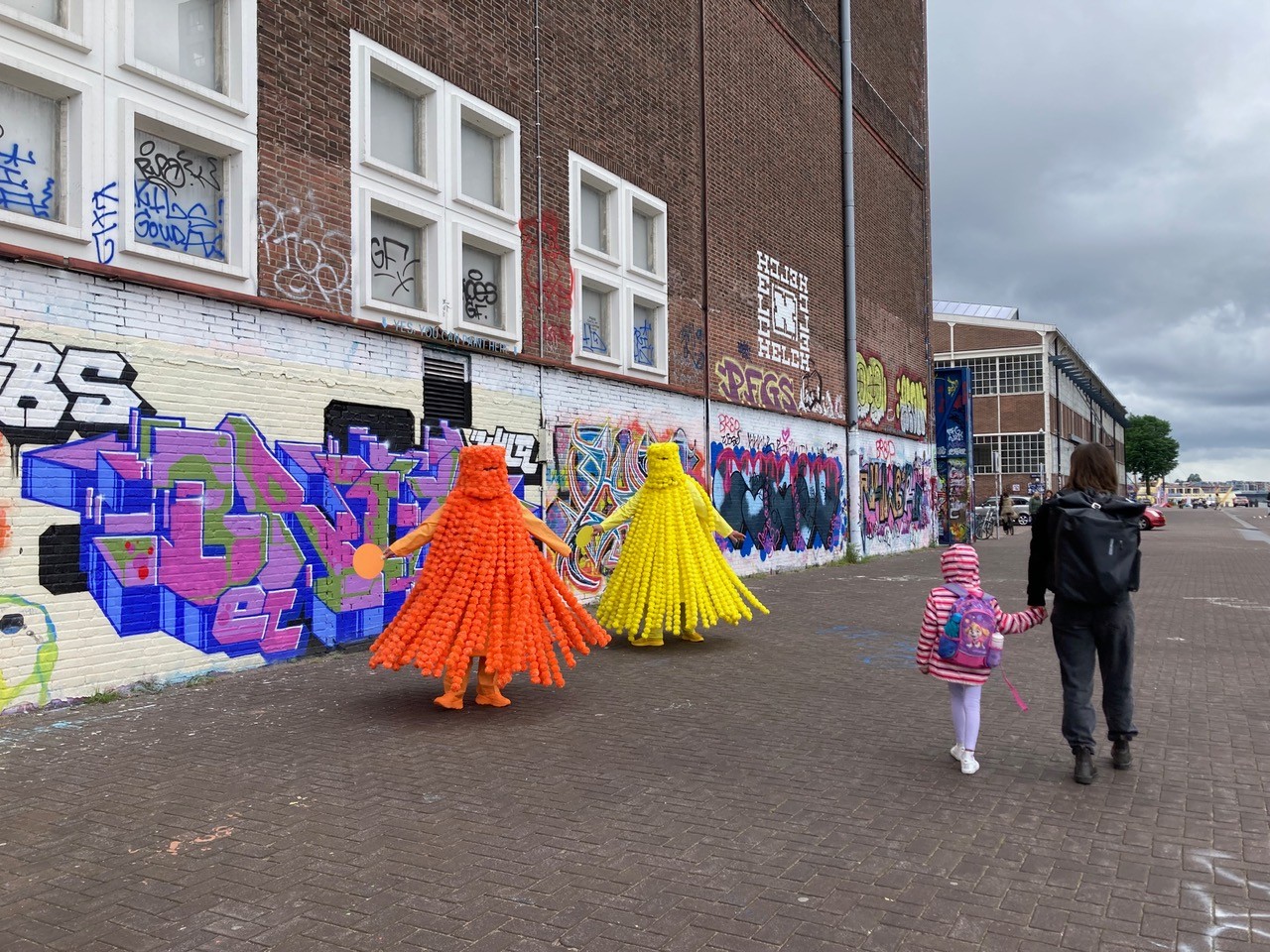
Performance: Guda Koster and Frans van Tartwijk
Good Trouble Polemic Discussions – drawing on the five principles, the university polemic method, and the wider Symposia framework. Good Trouble Polemic Discussions Good Trouble is not only a platform for artworks in public space; it is also a platform for public thinking. Our Polemic Discussions deliberately stage friction, invite disagreement, and transform conflict into shared understanding and future action. Rooted in five key principles – humanity, joy, creativity, collective energy, and racial justice – these discussions are designed as Socratic, arts-informed encounters. They sit between performance, seminar, and community assembly, generating both experience and knowledge: stories, concepts, questions, and practical “good trouble” actions that can feed back into our programmes, institutions, and daily lives. Polemic Discussions link our international art platform to the Good Trouble University pathway and our evolving Symposia programme. They ensure that every intervention in public space is accompanied by space to ask: Why this work, here, now – and what does it demand of us?
Five Principles Every polemic in Good Trouble, whether in a university, a public square, or a cultural institution, is anchored in five conceptual roots:
- Humanity – keeping lived experience, vulnerability, and care at the centre of debate.
- Joy – treating joy as a serious site of resistance, not a distraction from injustice.
- Creativity – recognising artistic and experimental practices as forms of knowledge in their own right.
- Collective Energy – building spaces where thinking and feeling are shared, not individualised.
- Race Justice – naming and addressing structural inequality, coloniality, and their intersections with gender, class, migration, and other forms of marginalisation. Each polemic asks: how do these principles manifest in our cities, our institutions, our bodies – and in the works we present as Good Trouble? Polemic as Method A Good Trouble Polemic is both a public event and a research method. It uses a clear structure to move from clash to insight.
1.Opening & Frame The session begins with a short framing:
o What is the central question? (e.g. Is joy in universities an act of resistance or a mask for injustice?)
o How does it connect to Good Trouble’s themes (climate & nature, submerged histories, public as medium, speculative identities, regenerative archives)?
o Which hub, artwork, or intervention does it relate to (Amsterdam, London, New York, Bogotá, etc.)? The facilitators situate the conversation within current struggles – climate catastrophe, patriarchal and colonial structures, housing and migration crises, and the impacts of AI – and make it clear that emotion, embodiment, and testimony are welcome forms of knowledge.
2.Framed Clash Two or more speakers present sharply opposed position statements on the central question. For example:
o Joy as radical resistance vs. joy as depoliticization
o Public art as a common good vs. public art as soft power
o University as a site of repair vs. university as an extractive institution These are short, structured “polemics” designed to surface assumptions and tensions, not to provide final answers.
3. Situated Responses Participants – students, artists, community organisers, staff, and local residents – respond from their own positionalities:
o “From where I stand, this looks like…”
o “In my institution/neighbourhood/background, this shows up as…” A designated “guardian of humanity” ensures that concrete experience, rather than abstract theory alone, remains at the centre.
4. Creative / Embodied Intervention An artist or practitioner offers a creative response: a short performance, sound piece, reading, film clip, or another artistic intervention, followed by a brief reflection on:
o how the work “thinks” about the question, o and what it reveals that conventional debate cannot. This affirms Good Trouble’s core belief: art is a mode of inquiry into our present and our possible futures.
5. Testimony & Witness Lived experiences related to the theme – racism, precarious housing, border violence, gendered and transphobic exclusions, environmental injustice – are invited into the room through prepared or spontaneous testimony. A structured “witness circle” helps link those stories back to systems and structures: policies, funding models, institutional cultures, urban design, and the histories submerged beneath them.
6. Analytical Harvest & Actions The session closes with a collective “harvest” of:
o key tensions and insights,
o open questions,
o and 1–3 concrete good trouble actions participants can take in their own contexts. These may range from curatorial shifts and changes to teaching practice to local campaigns, new collaborations, or follow-up labs.